
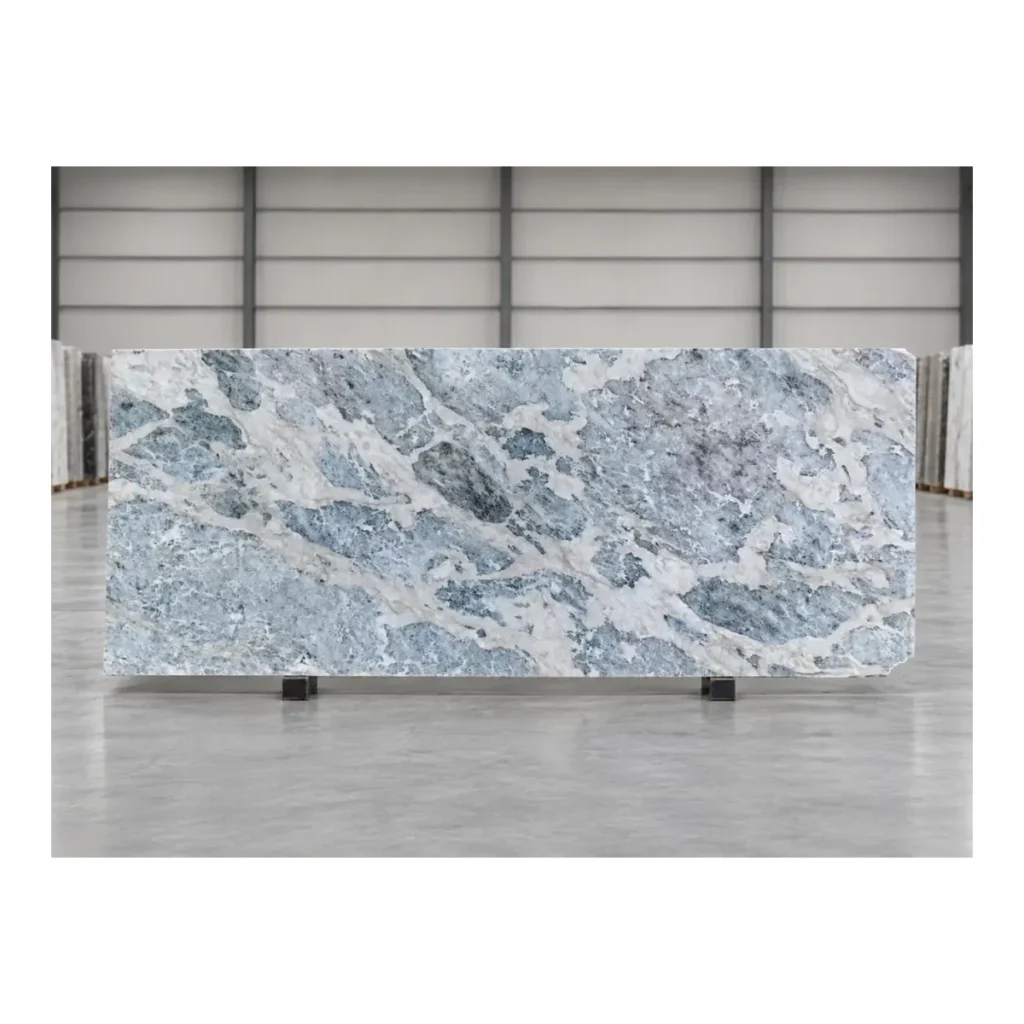
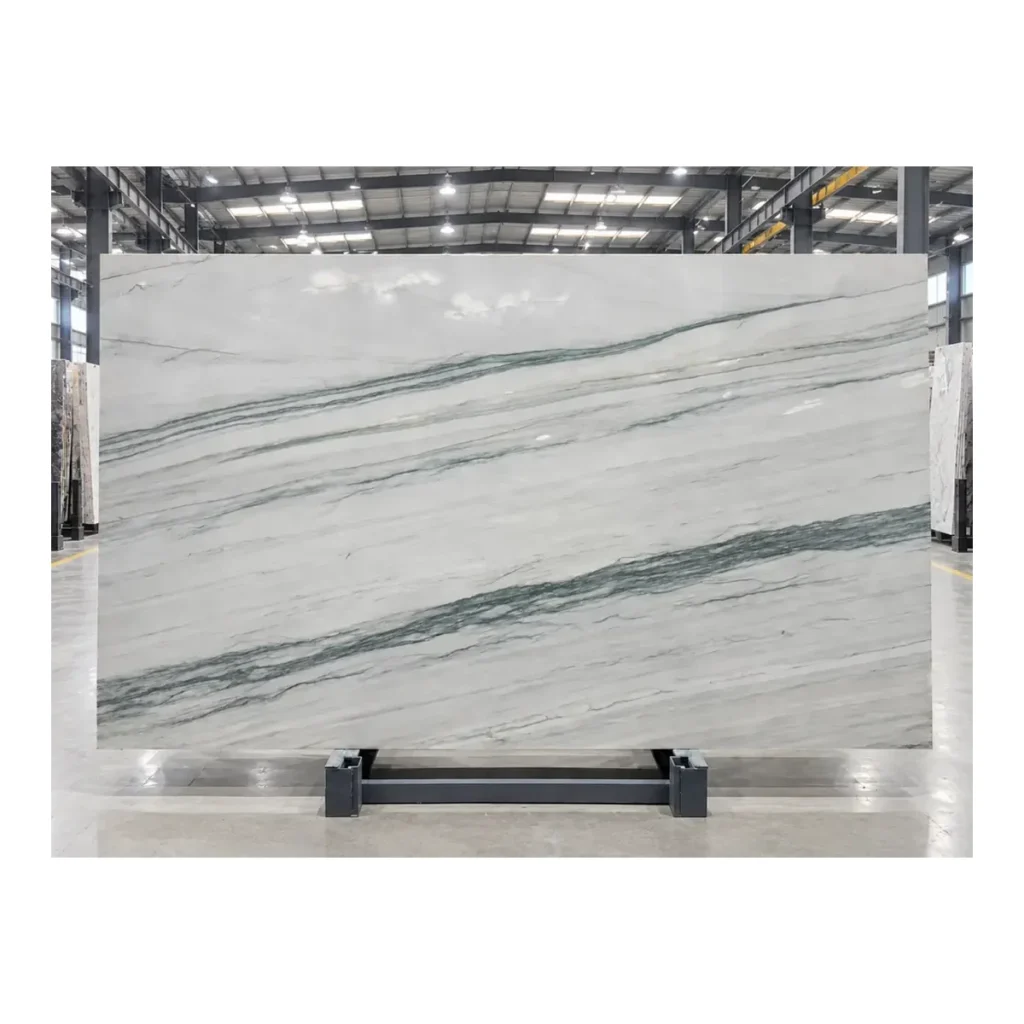

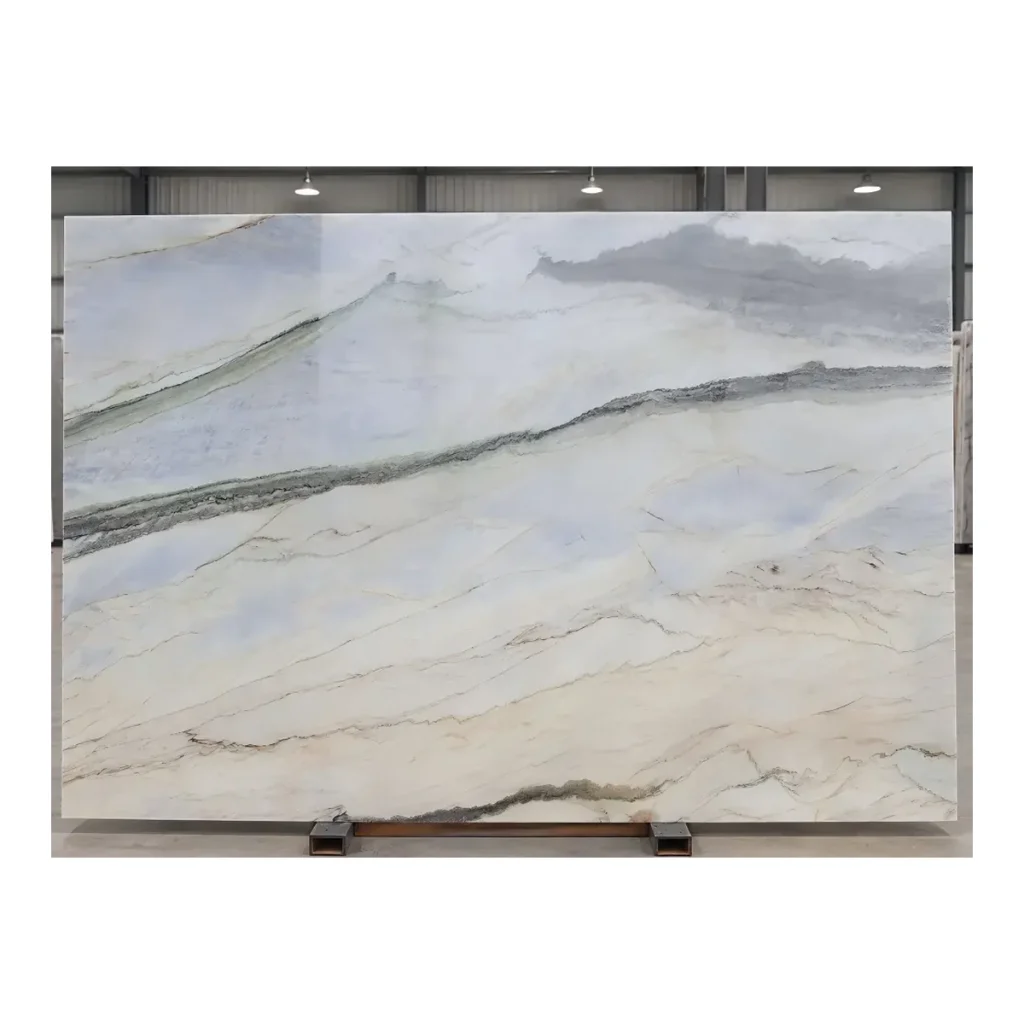
Material Identity at Full Slab Scale
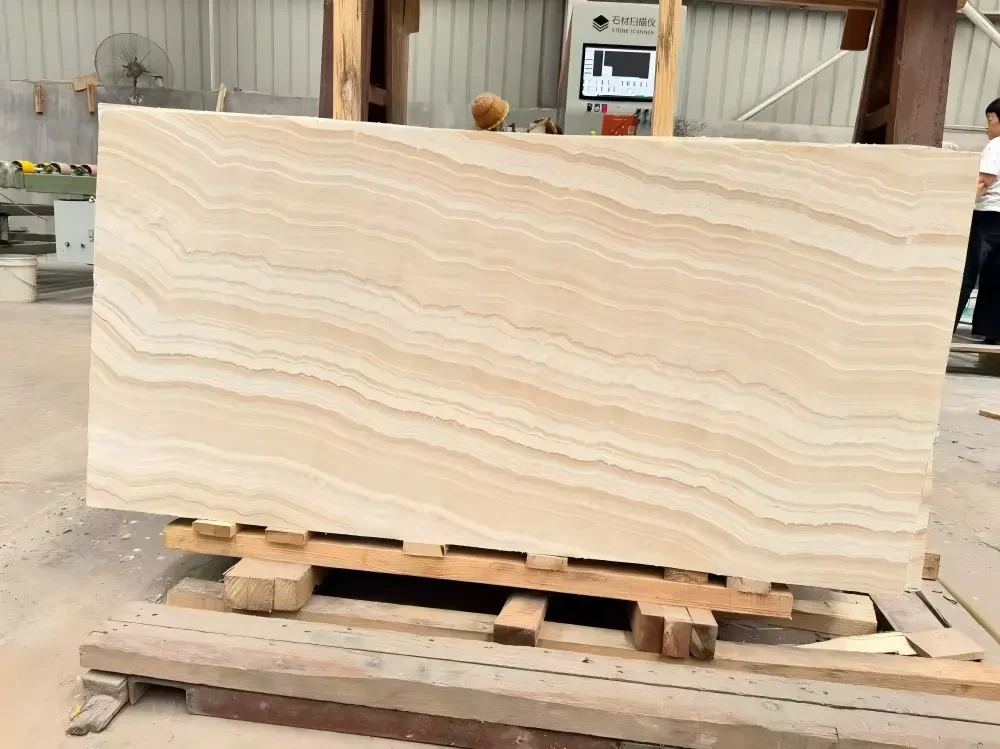
Fine parallel bands give this onyx a quieter architectural rhythm than cloud-pattern varieties. Cream, ivory and pale beige layers can run almost straight or form gentle waves, with occasional stronger lines marking the geological build-up. The pattern direction is the main design asset: horizontal placement can widen a room, while vertical orientation adds height and formality.
White Tiger Onyx suits calm hospitality and residential interiors where warmth is preferred over pure white. It pairs with pale oak, bronze, linen tones and dark accents. Backlighting reveals a soft amber glow, while front lighting emphasizes the layered structure. The project team should choose one dominant orientation and maintain it across connected walls, stair components or island faces.

Selecting the Actual Slabs
Select slabs for band spacing, background warmth, transmission and continuity. If the project uses bookmatching, photograph consecutive slabs and confirm the opening direction before reservation. Floors and stairs require additional review of finish, slip strategy, module size and traffic conditions; the visual match alone is not enough to approve material for those applications.
Natural stone should be purchased against identified inventory. Joan Stone can coordinate current slab photographs, dimensions and selection notes so the buyer can connect the design approval to a specific physical slab group.
Product and Supply Parameters
| Material | Natural Banded Onyx |
|---|---|
| Product Code | JS-OX-WTO-025 |
| Supply Forms | Selected slabs, cut-to-size panels, countertops, furniture components and project fabrication, subject to current stock and approved drawings. |
| Thickness and Finish | Confirm against current inventory and the application. Finish samples, edge profiles and any surface treatment should be approved before production. |
| Variation Control | Approve actual slab numbers, acceptable color and movement range, usable areas, orientation and allocation by room or finished component. |
| Export Quality Control | Dimensional checks, surface and edge review, marked layout control, piece labels, dry fit where specified, packing records and shipping documentation. |
Layered White Onyx Feature Wall
A large wall displays the natural bands at their best. Establish one datum, coordinate panel joints with the architecture and approve the full elevation before cutting.
The application photograph communicates a design direction. Final supply must follow the approved physical slabs, fabrication drawings, engineering interfaces and installation requirements for the project.

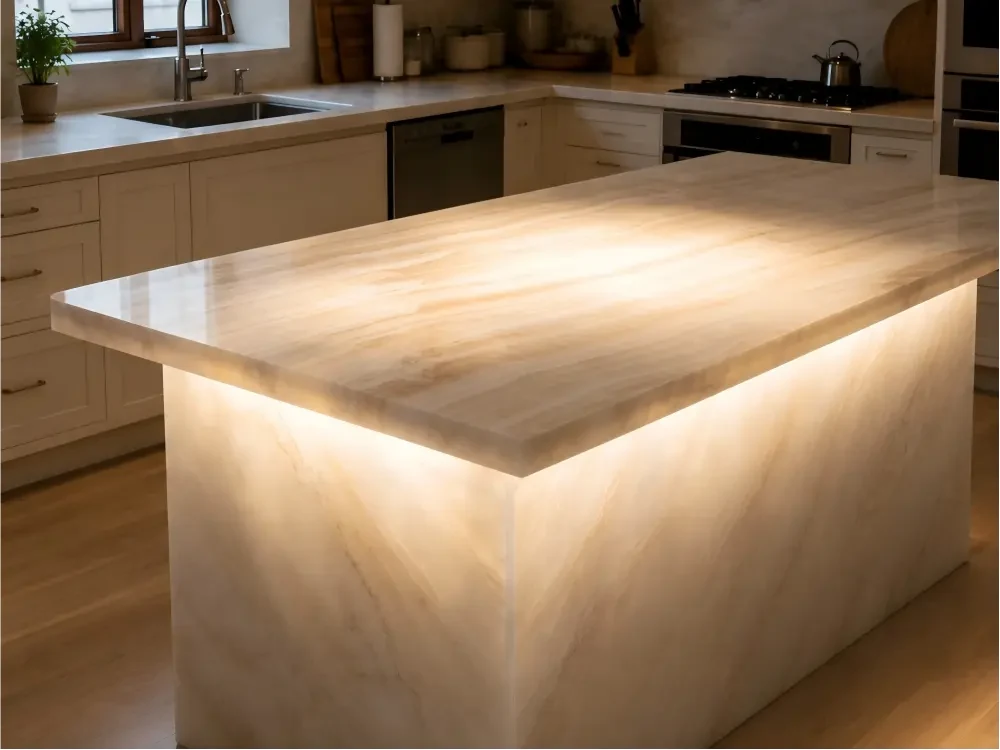
Backlit White Tiger Onyx Counter
An illuminated counter should use the banding to reinforce its horizontal form. Test the light cavity and edge return so the glow remains even across the top and vertical face.
The application photograph communicates a design direction. Final supply must follow the approved physical slabs, fabrication drawings, engineering interfaces and installation requirements for the project.
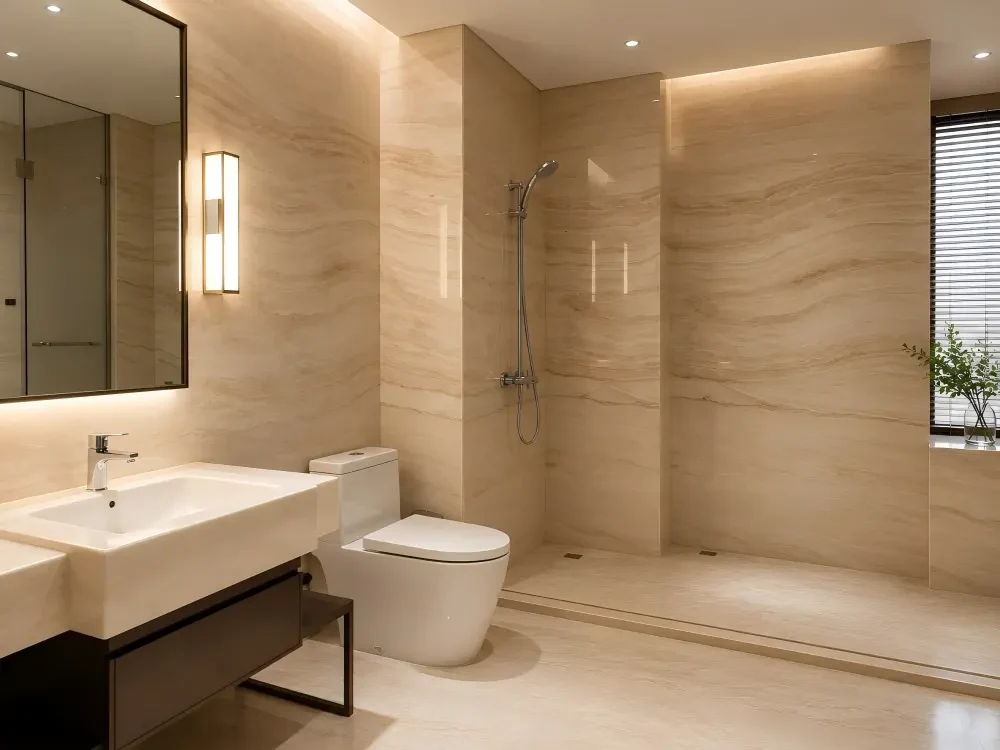
Bathroom Wall and Tub Surround
Wet-area panels require waterproof substrate, joint planning, plumbing coordination and a suitable care plan. Bookmatched bands can frame the tub when penetrations are fixed early.
The application photograph communicates a design direction. Final supply must follow the approved physical slabs, fabrication drawings, engineering interfaces and installation requirements for the project.

Carved or Clad Bathtub
A stone bathtub demands engineering, drainage, lifting and installation planning in addition to appearance. Confirm whether the design is carved, laminated or clad before material allocation.
The application photograph communicates a design direction. Final supply must follow the approved physical slabs, fabrication drawings, engineering interfaces and installation requirements for the project.

White Onyx Floor
For floor use, assess traffic, finish, slip resistance, substrate, movement joints and maintenance. Dry laying helps distribute band and tone variation before installation.
The application photograph communicates a design direction. Final supply must follow the approved physical slabs, fabrication drawings, engineering interfaces and installation requirements for the project.

Onyx Staircase
Number treads, risers and landings in sequence, preserve band direction and include replacement pieces. Lighting and nosing details should not create fragile unsupported edges.
The application photograph communicates a design direction. Final supply must follow the approved physical slabs, fabrication drawings, engineering interfaces and installation requirements for the project.

White Tiger Onyx Island
A clean island benefits from long continuous bands. Reserve top and end panels together and coordinate the sink, support and appliance zones with the marked slab layout.
The application photograph communicates a design direction. Final supply must follow the approved physical slabs, fabrication drawings, engineering interfaces and installation requirements for the project.

White Tiger Onyx Countertop
A front-lit counter emphasizes the pale layered structure without relying on illumination. Confirm seams, support, edge build-up and the intended band direction before cutting.
The application photograph communicates a design direction. Final supply must follow the approved physical slabs, fabrication drawings, engineering interfaces and installation requirements for the project.

White Tiger Onyx Vanity
For a bathroom vanity, protect sound rails around the basin, coordinate the splash and apron, and approve waterproofing, sealing and routine care with the installer.
The application photograph communicates a design direction. Final supply must follow the approved physical slabs, fabrication drawings, engineering interfaces and installation requirements for the project.
Fabrication Decisions That Protect the Design
Long bands make even small alignment errors visible. Shop drawings should show datum lines that continue across wall panels, vanity splashes and waterfall returns. Stair treads and risers need consistent orientation, sound edge zones and engineered support. Bathtubs or carved pieces require sufficient block or laminated thickness, controlled machining and staged inspection because removal of excess material cannot be reversed.
Before production, the approved shop drawing should define finished dimensions, tolerances, visible faces, seam positions, vein direction, cutouts, edge construction, reinforcement, support and piece identification. Any change after cutting can affect both yield and visual continuity.
Buyer Risks and Common Ordering Mistakes
Mixing horizontal and vertical bands
Uncontrolled orientation breaks the calm rhythm and makes connected surfaces look assembled from unrelated material.
Specifying floors without performance review
A polished translucent stone may not meet the slip, traffic or maintenance needs of every floor; finish and substrate must be assessed.
Cutting stairs without sequence control
Random treads and risers create abrupt color changes and make installation slower because the intended order is unclear.
If X → Choose Y Procurement Logic
Commercial Scope for International Projects
For multi-area projects, separate the slab schedule by elevation or room and define the acceptable band range for each zone. The purchase order should state finish, module dimensions, sequence, spare ratio, labeling and whether dry laying or wall elevation review is required. Export crates must follow installation order so contractors can locate consecutive pieces without reopening every package.
Quotation Checklist
Send drawings or finished dimensions, quantity, thickness, finish, edge details, cutouts, acceptable variation, destination, target schedule and the required inspection and packing scope. For visually connected pieces, also identify the main viewing direction and any bookmatch, vein-following or waterfall requirement.
Quality Control and Export Packing
| Before Cutting | Confirm slab IDs, dimensions, usable areas, surface condition, finish, orientation, nesting and signed layout approval. |
|---|---|
| During Production | Check dimensions, diagonals, cutouts, edges, mitres, holes, reinforcement, finish consistency and piece labels against the approved drawing. |
| Before Packing | Review visible surfaces, dry-fit relationships where specified, quantities, spare pieces, protective film or interleaf material and packing order. |
| Export Shipment | Use suitable reinforced crates or A-frames, moisture protection, clear shipping marks, packing lists and loading records appropriate to the product and route. |
Inspection should focus on agreed acceptance criteria, not on making natural stone look manufactured. Written variation standards and signed slab layouts reduce disputes while protecting the visual intent of the project.
JOAN STONE · Material-to-Shipment Support
How JOAN STONE Supports White Tiger Onyx Slabs for Walls, Floors and Stairs Orders
JOAN STONE connects material selection with the production and export steps that follow, so the approved stone and the quoted service scope stay aligned. For this material, buyer review should cover translucency, reinforcement, rear treatment, lighting temperature, panel joints and installation support before production is released.
First-hand evidence on this page: This product record currently includes 11 linked images for initial review. They provide first-hand visual references from the product file, while final purchasing approval should use the current selected batch, identified full-face photographs and agreed acceptance notes.
- 01Actual Material Review
Coordinate current slab or panel photographs, close-up details, dimensions and selection notes for the pieces being considered.
- 02Layout & Drawing Coordination
Review orientation, seams, sizes, thickness, edges, openings and the intended crop before the material is committed to cutting.
- 03Fabrication & Inspection
Support cut-to-size work or finished components, then coordinate surface, dimension, label and packing checks according to the approved scope.
- 04Export Handling
Coordinate packing review, export documents, container loading communication and shipment follow-up for international orders when required.
For a workable quotation: send the application, drawings or required sizes, quantity, preferred finish, edge and cutout details, destination, target schedule, packing needs and inspection expectations.
FAQ for B2B Stone Buyers
Can White Tiger Onyx be backlit?
Many areas can transmit light, but the effect varies by slab and thickness. Approve actual material and a representative lighting mockup.
Can it be used for floors and stairs?
It may be considered only after reviewing traffic, finish, slip requirements, substrate, support, edge details, maintenance and local project standards.
How do I keep the bands aligned?
Use numbered slabs, a full elevation or dry lay, fixed datum lines and shop drawings that show orientation and joint positions before cutting.
Is every slab the same cream color?
No. Background warmth, band spacing, translucency and natural seams vary. Define an acceptable range and allocate slabs by room.
What should be inspected before export?
Check dimensions, orientation, finish, visible surfaces, edges, labels, sequence, quantities, spare pieces and the packing list against approved drawings.
Final Note / Practical Takeaway
White Tiger Onyx should be purchased as identified natural slabs, not as a color name alone. Approve the real material, connect it to a marked cutting layout, define measurable quality checkpoints and confirm export packing before production. This approach protects appearance, yield, schedule and installation coordination.