
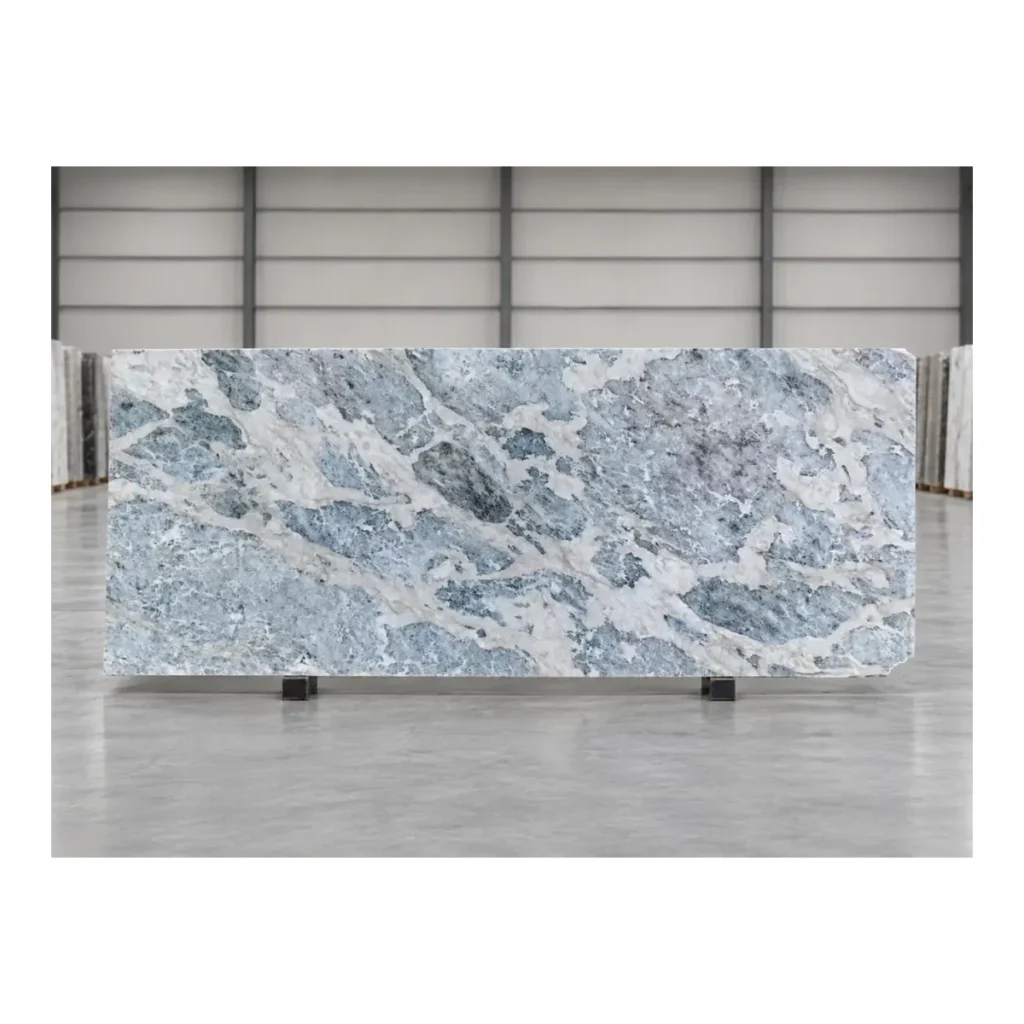
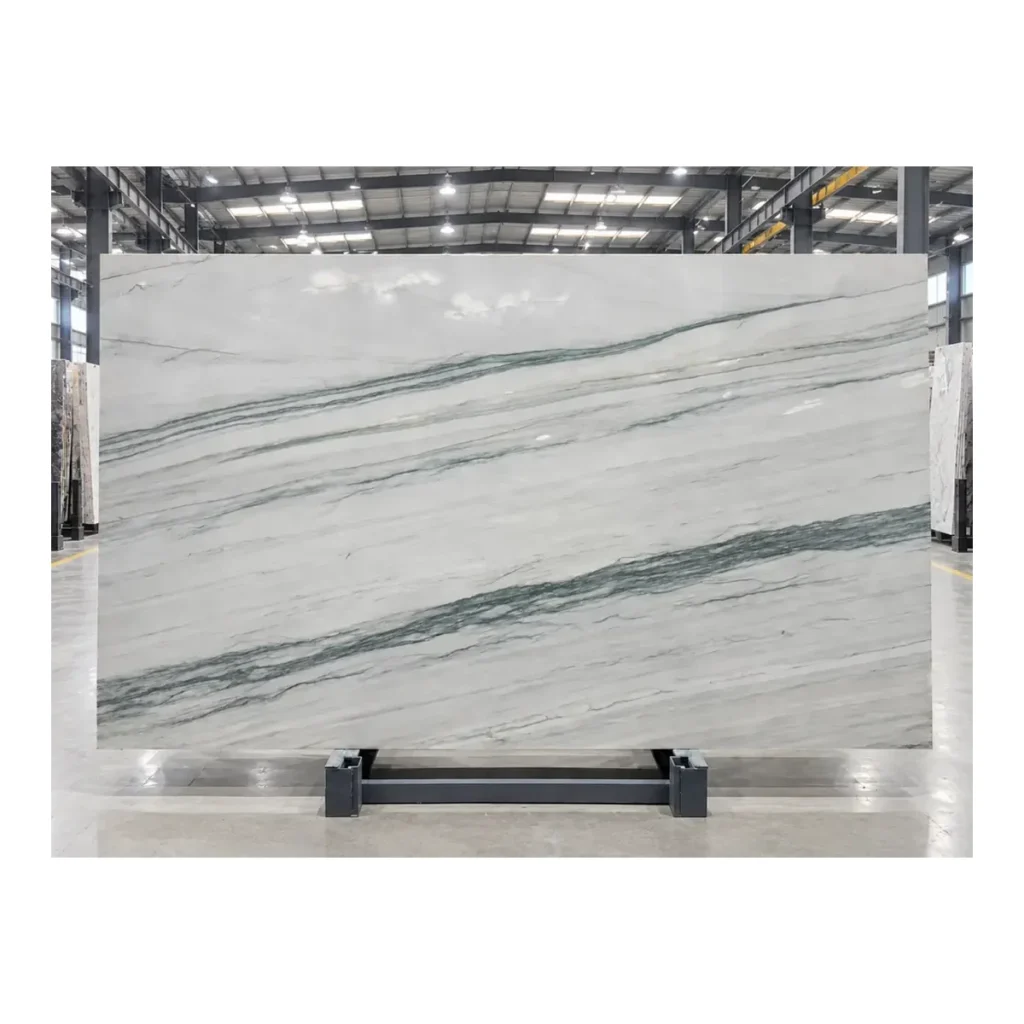

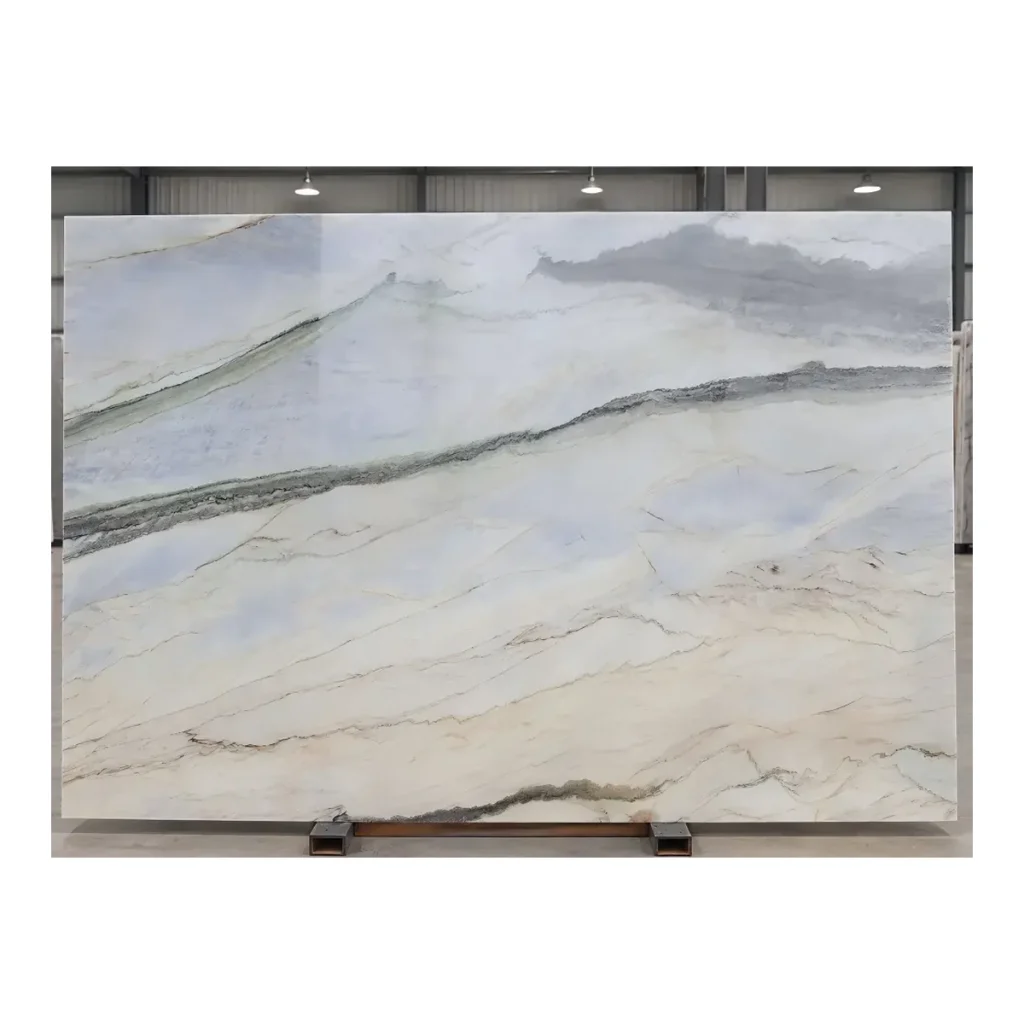
Material Identity at Full Slab Scale
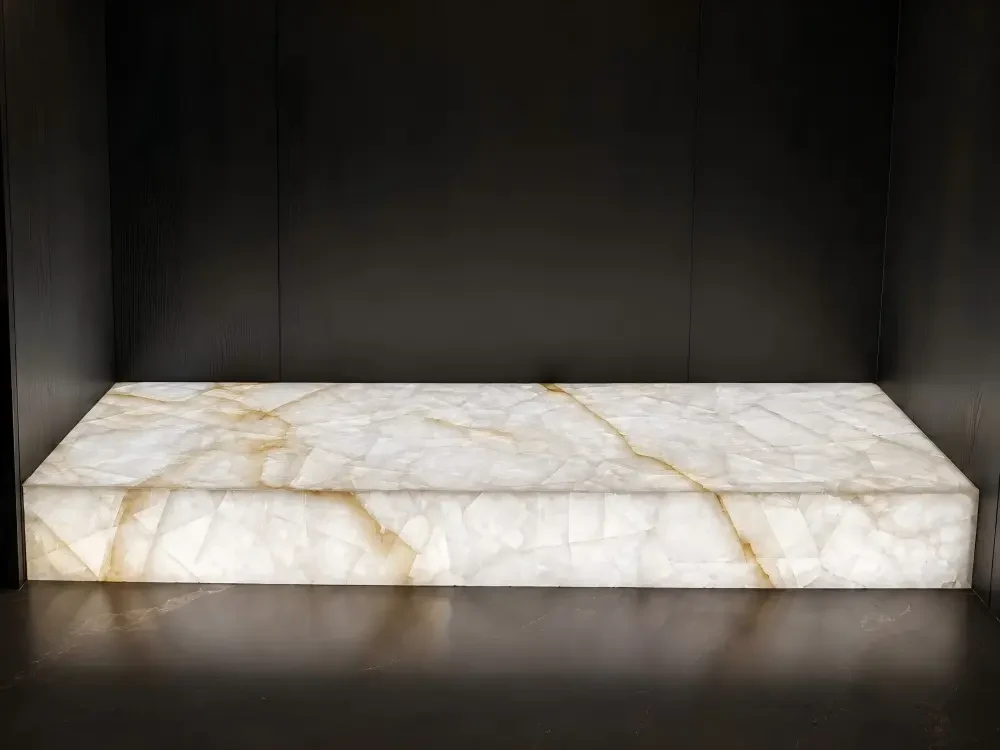
This selection is valued for optical depth rather than a flat white appearance. Interlocking crystals create soft translucent zones, while cloudy areas and restrained warm seams give the slab natural structure. The surface can look calm in daylight and dramatically more layered when illuminated from behind. Because light transmission changes across a single slab, full-face evaluation is more useful than judging a small sample.
The material works best where the design intentionally controls light, shadow and edge thickness. A reception bar can become a glowing architectural object; an unlit dining table reads as a refined pearly surface; and a vanity can use concealed lighting to emphasize depth without overwhelming the room. Buyers should decide whether translucency is the main feature or a secondary effect before selecting slabs and detailing the assembly.

Selecting the Actual Slabs
Review every candidate slab both unlit and with a representative light source behind it. Record crystal density, cloudy zones, warm mineral lines, repaired areas, usable dimensions and the intended face. For illuminated work, create a marked layout that places attractive translucent areas in the main viewing zones and keeps structural rails, service equipment and cutouts away from fragile or visually important transitions.
Natural stone should be purchased against identified inventory. Joan Stone can coordinate current slab photographs, dimensions and selection notes so the buyer can connect the design approval to a specific physical slab group.

Product and Supply Parameters
| Material | Natural Translucent Marble |
|---|---|
| Product Code | JS-MB-OWC-023 |
| Supply Forms | Selected slabs, cut-to-size panels, countertops, furniture components and project fabrication, subject to current stock and approved drawings. |
| Thickness and Finish | Confirm against current inventory and the application. Finish samples, edge profiles and any surface treatment should be approved before production. |
| Variation Control | Approve actual slab numbers, acceptable color and movement range, usable areas, orientation and allocation by room or finished component. |
| Export Quality Control | Dimensional checks, surface and edge review, marked layout control, piece labels, dry fit where specified, packing records and shipping documentation. |
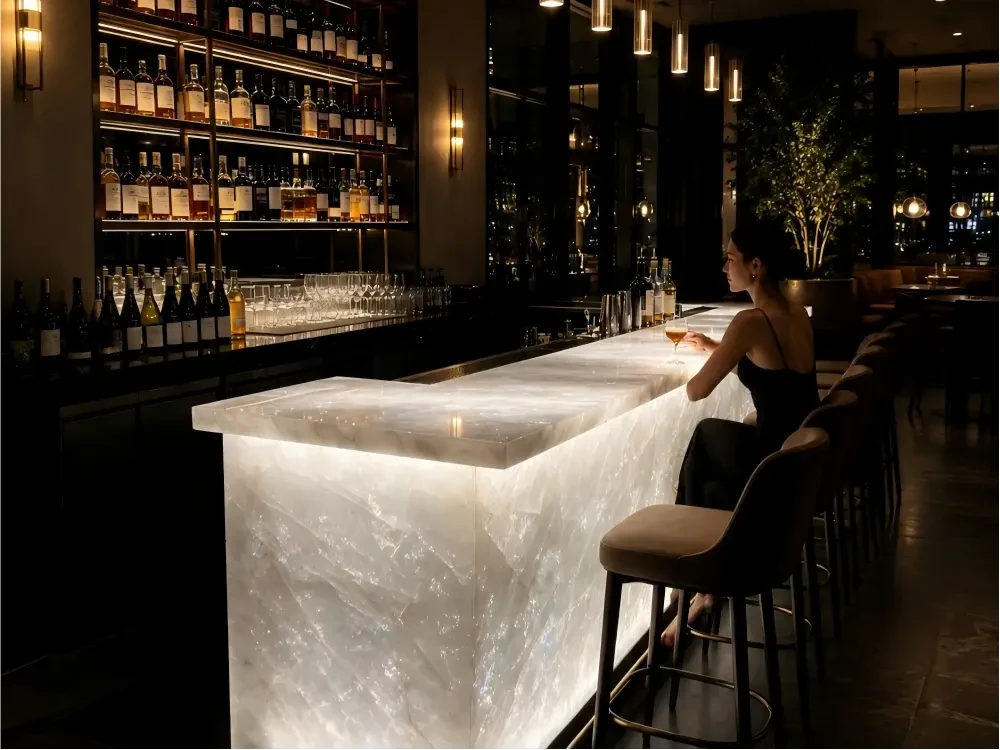
Backlit Bar and Reception Front
A hospitality bar combines high visual impact with daily service demands. The front, working top, corners and equipment openings should be resolved together so the luminous face remains continuous while maintenance access, ventilation and impact protection stay practical.
The application photograph communicates a design direction. Final supply must follow the approved physical slabs, fabrication drawings, engineering interfaces and installation requirements for the project.
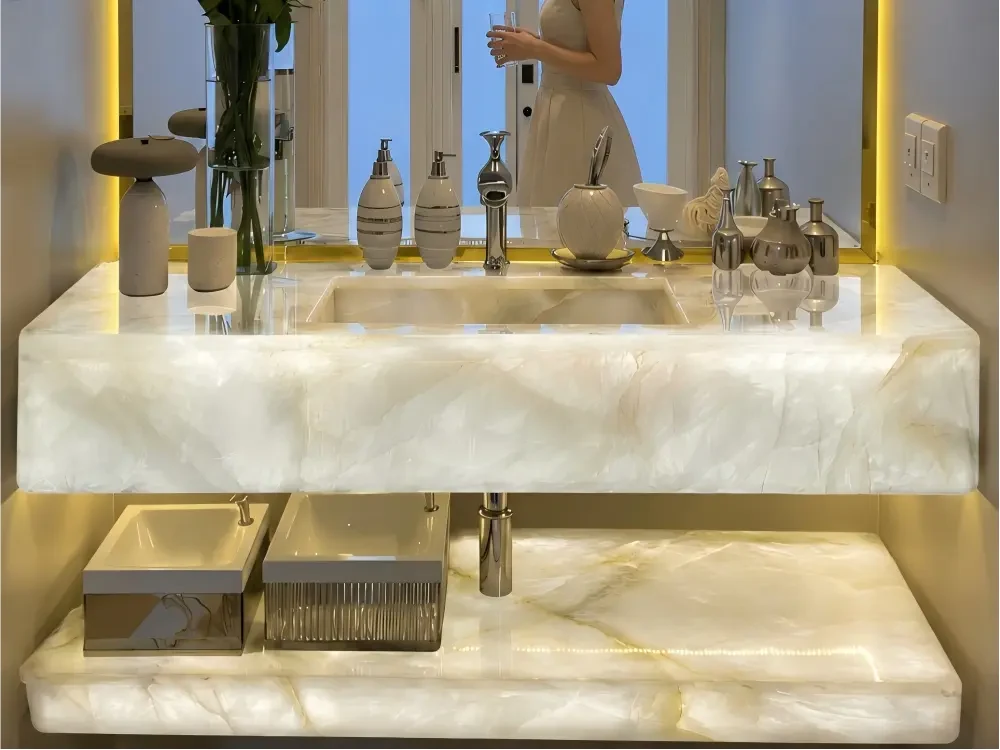
Illuminated Bathroom Vanity
A vanity needs coordinated basin rails, faucet holes, waterproofing, support and electrical separation. Lighting should reveal the stone softly without exposing fixing shadows or creating glare at eye level.
The application photograph communicates a design direction. Final supply must follow the approved physical slabs, fabrication drawings, engineering interfaces and installation requirements for the project.
Opal White Coffee Table
A solid-looking coffee table highlights crystalline depth across the top and wrapped sides. The crop, mitres, internal support and handling points should be approved as one furniture object rather than as unrelated pieces.
The application photograph communicates a design direction. Final supply must follow the approved physical slabs, fabrication drawings, engineering interfaces and installation requirements for the project.

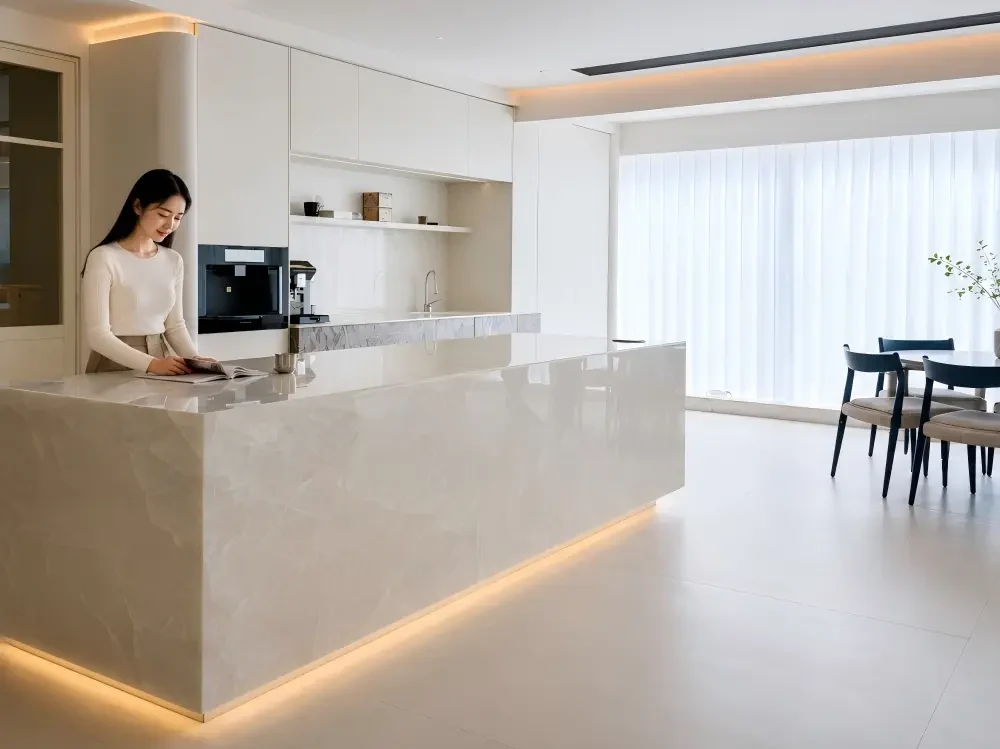
Kitchen and Display Counter
For a working counter, confirm whether the stone will be lit, how spills and heat will be managed, and where seams and appliances occur. A representative finish and care protocol should be approved before production.
The application photograph communicates a design direction. Final supply must follow the approved physical slabs, fabrication drawings, engineering interfaces and installation requirements for the project.
Illuminated Desk and Console
A desk can use a controlled glow to emphasize form, but cable routes, knee clearance, dimming, driver access and edge comfort must be integrated into the shop drawing.
The application photograph communicates a design direction. Final supply must follow the approved physical slabs, fabrication drawings, engineering interfaces and installation requirements for the project.
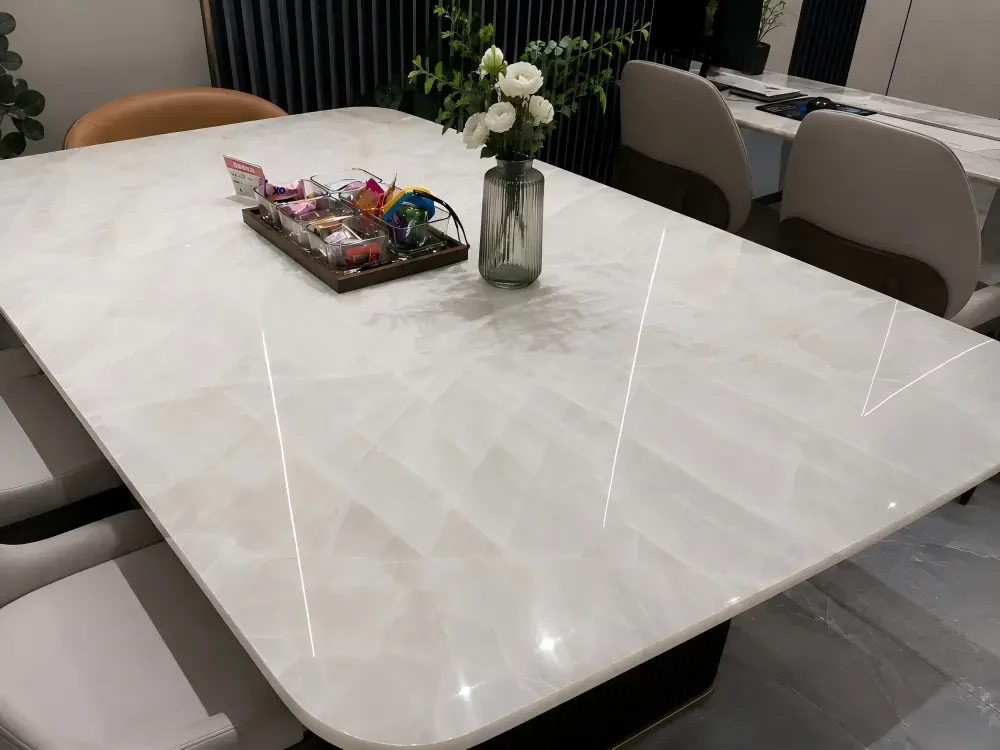
Dining Table
An unlit dining table shows the pearl-like surface at close range. Select the center composition deliberately and coordinate the edge build-up, underside reinforcement, base connection and transport method.
The application photograph communicates a design direction. Final supply must follow the approved physical slabs, fabrication drawings, engineering interfaces and installation requirements for the project.
Fabrication Decisions That Protect the Design
Backlit stone requires coordination between stone, lighting, metalwork, ventilation and access panels. The fabricator needs the LED type, color temperature, diffuser build-up, cavity depth and fixing method before cutting. Mitred edges should be mocked up because the return can transmit light differently from the face. For tables and vanities, confirm reinforcement, base fixing and cutout clearance while preserving the selected crystalline composition.
Before production, the approved shop drawing should define finished dimensions, tolerances, visible faces, seam positions, vein direction, cutouts, edge construction, reinforcement, support and piece identification. Any change after cutting can affect both yield and visual continuity.
Buyer Risks and Common Ordering Mistakes
Approving the slab only under room light
A slab that looks evenly white from the front can reveal dark zones, strong seams or uneven transmission after backlighting.
Choosing LEDs after stone fabrication
Incorrect spacing, color temperature or cavity depth can create hotspots, visible strips and inconsistent color across adjacent panels.
Ignoring access and heat management
A sealed assembly without service access or ventilation can make future lighting maintenance costly and may shorten component life.
If X → Choose Y Procurement Logic
Commercial Scope for International Projects
A B2B quotation should distinguish raw slab supply from a tested illuminated assembly. State whether Joan Stone is providing only stone, finished panels, metal support, diffuser layers, lighting components or a coordinated package. Approval should include slab IDs, a lighting sample, shop drawings, dry-fit photographs, electrical access responsibilities, piece labels and packing sequence. This prevents a visually attractive slab from being installed with uneven hotspots or inaccessible service components.
Quotation Checklist
Send drawings or finished dimensions, quantity, thickness, finish, edge details, cutouts, acceptable variation, destination, target schedule and the required inspection and packing scope. For visually connected pieces, also identify the main viewing direction and any bookmatch, vein-following or waterfall requirement.
Quality Control and Export Packing
| Before Cutting | Confirm slab IDs, dimensions, usable areas, surface condition, finish, orientation, nesting and signed layout approval. |
|---|---|
| During Production | Check dimensions, diagonals, cutouts, edges, mitres, holes, reinforcement, finish consistency and piece labels against the approved drawing. |
| Before Packing | Review visible surfaces, dry-fit relationships where specified, quantities, spare pieces, protective film or interleaf material and packing order. |
| Export Shipment | Use suitable reinforced crates or A-frames, moisture protection, clear shipping marks, packing lists and loading records appropriate to the product and route. |
Inspection should focus on agreed acceptance criteria, not on making natural stone look manufactured. Written variation standards and signed slab layouts reduce disputes while protecting the visual intent of the project.
JOAN STONE · Material-to-Shipment Support
How JOAN STONE Supports Opal White Cristallo Marble Slabs for Backlit Interiors Orders
For international orders, JOAN STONE treats the selected material, cutting information, inspection evidence and shipping preparation as one connected approval process. For this material, buyer review should cover tone range, vein direction, natural fissures, repaired areas and the position of seams or cutouts before production is released.
First-hand evidence on this page: This product record currently includes 8 linked images for initial review. They provide first-hand visual references from the product file, while final purchasing approval should use the current selected batch, identified full-face photographs and agreed acceptance notes.
- 01Actual Material Review
Coordinate current slab or panel photographs, close-up details, dimensions and selection notes for the pieces being considered.
- 02Layout & Drawing Coordination
Review orientation, seams, sizes, thickness, edges, openings and the intended crop before the material is committed to cutting.
- 03Fabrication & Inspection
Support cut-to-size work or finished components, then coordinate surface, dimension, label and packing checks according to the approved scope.
- 04Export Handling
Coordinate packing review, export documents, container loading communication and shipment follow-up for international orders when required.
For a workable quotation: send the application, drawings or required sizes, quantity, preferred finish, edge and cutout details, destination, target schedule, packing needs and inspection expectations.
FAQ for B2B Stone Buyers
Can Opal White Cristallo Marble be backlit?
Many selected areas can transmit light, but the effect varies by slab and thickness. Approve the actual slab and a representative lighting mockup before production.
How do I avoid visible LED hotspots?
Coordinate LED spacing, color temperature, diffuser material, cavity depth and the stone’s transmission pattern, then test a representative panel before fabricating the full order.
Can this material be used for bathroom vanities?
It can be considered after confirming the actual slab, support, cutouts, waterproofing, sealing, cleaning plan, electrical separation and installation details.
Should I select slabs from front-lit or backlit photos?
Use both. Front-lit images show color and surface character, while backlit review reveals transmission differences, seams, cloudy zones and potential lighting shadows.
What is needed for an export quotation?
Send drawings, dimensions, quantity, finish, edge details, cutouts, lighting scope, destination, schedule, inspection requirements, labeling and packing standards.
Final Note / Practical Takeaway
Opal White Cristallo Marble should be purchased as identified natural slabs, not as a color name alone. Approve the real material, connect it to a marked cutting layout, define measurable quality checkpoints and confirm export packing before production. This approach protects appearance, yield, schedule and installation coordination.