
Material Identity at Full Slab Scale
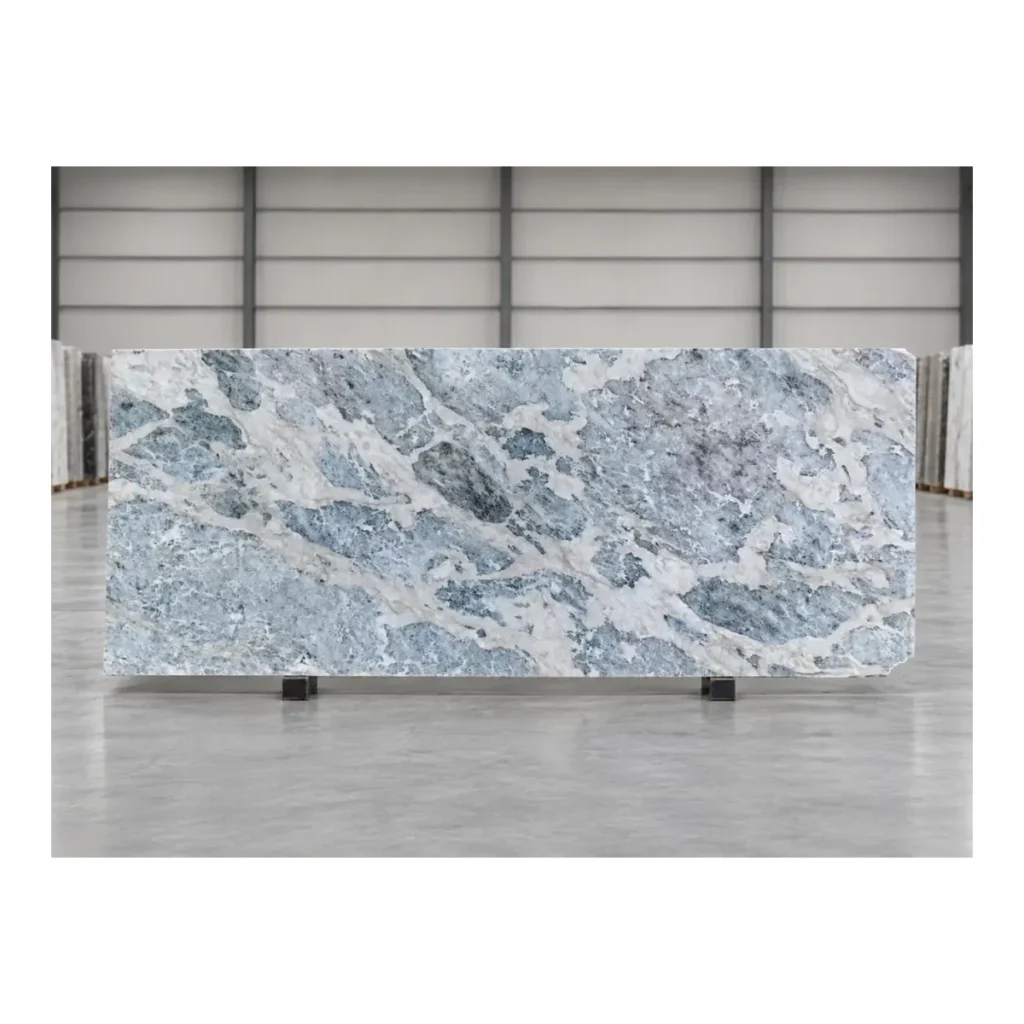
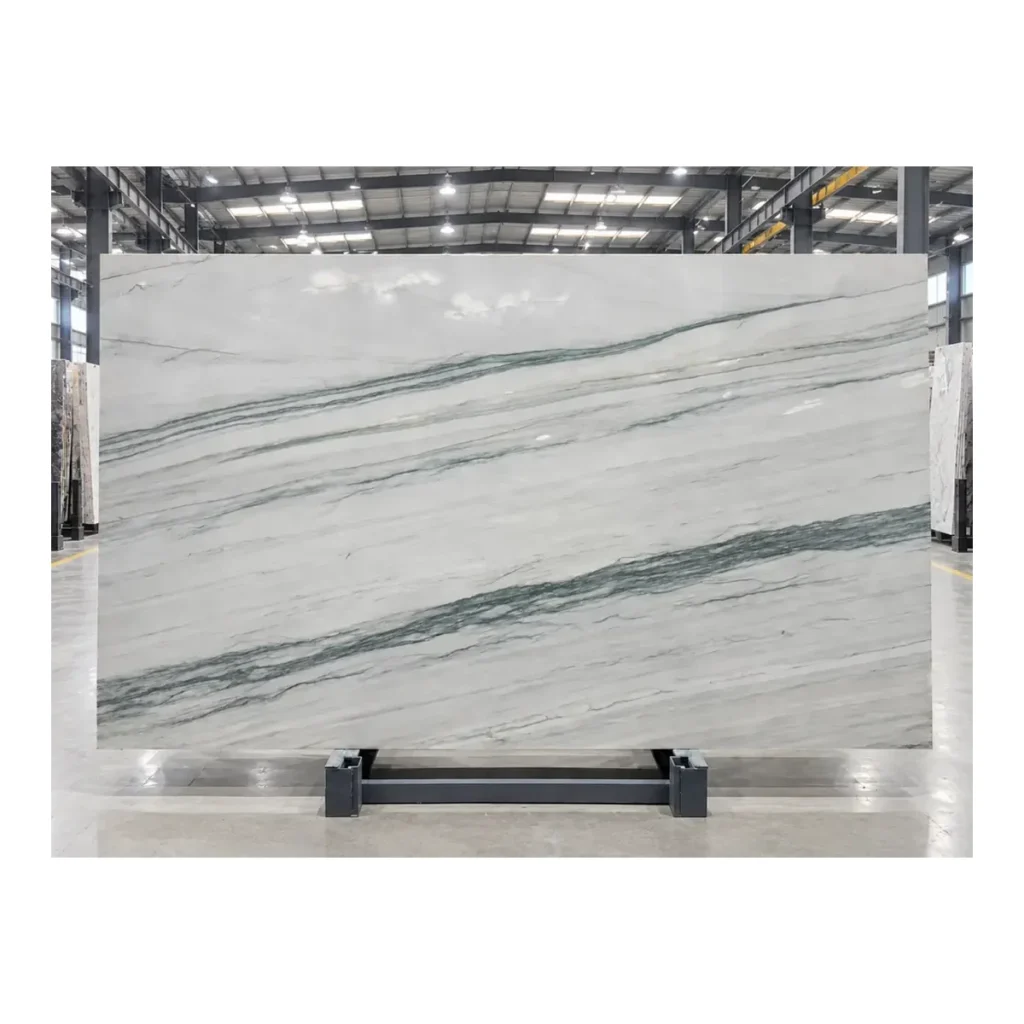
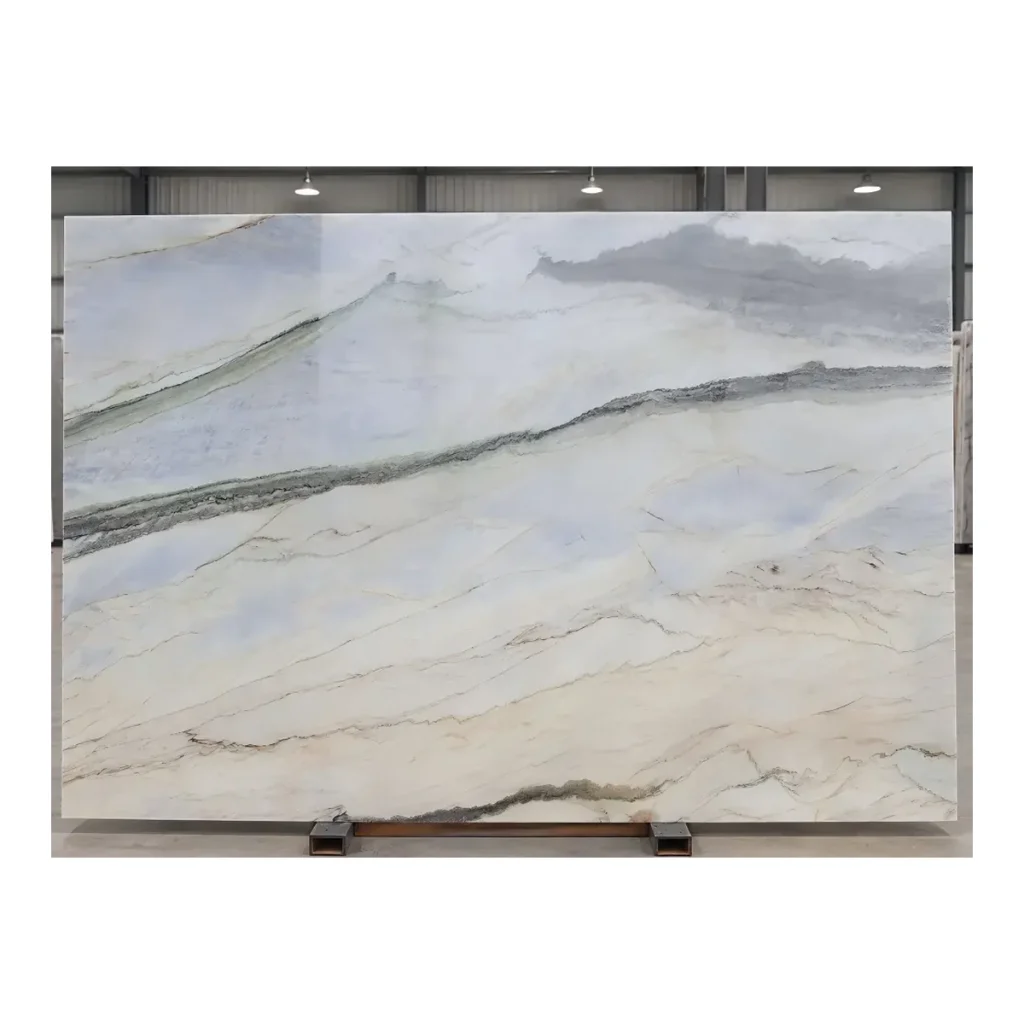
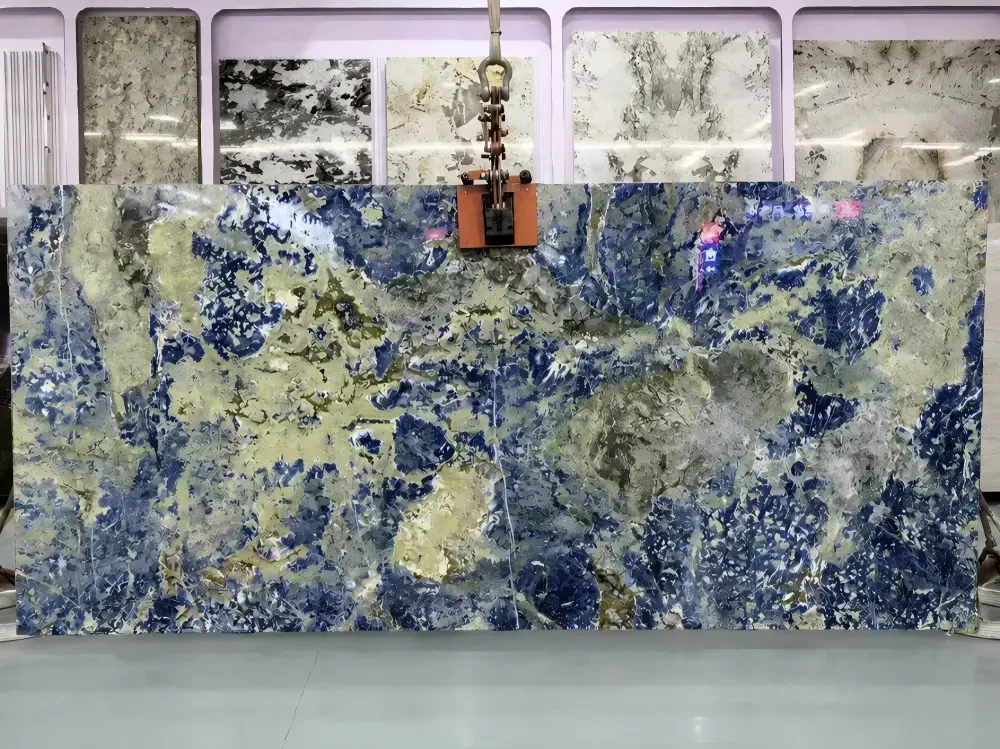
The selected batch shows a layered, cloud-like composition rather than a flat blue field. White crystalline areas open the surface, blue zones provide depth, and soft green-grey transitions make the stone suitable for interiors that need color without a uniformly saturated result. At full slab scale, the movement reads as geological artwork; in smaller components, each crop can look substantially different.
This lighter Sodalite Blue Extra selection works particularly well with brushed metal, pale timber, off-white cabinetry and restrained architectural lighting. It can become the main visual feature of a room without forcing every surrounding finish to compete. Buyers should decide whether they prefer blue-dominant, white-dominant or more evenly mixed panels before slab allocation begins.

Selecting the Actual Slabs
Approve the complete slab face, not a close-up sample. Record the slab number, dimensions, repaired or reinforced areas, finish and usable outline. For a wall, dining table or vanity ensemble, mark the intended crop directly on the slab image so the strongest blue-white transitions remain in visible areas rather than falling into waste or cutouts.
Natural stone should be purchased against identified inventory. Joan Stone can coordinate current slab photographs, dimensions and selection notes so the buyer can connect the design approval to a specific physical slab group.
Product and Supply Parameters
| Material | Natural Quartzite |
|---|---|
| Product Code | JS-QZ-SBE-017 |
| Supply Forms | Selected slabs, cut-to-size panels, countertops, furniture components and project fabrication, subject to current stock and approved drawings. |
| Thickness and Finish | Confirm against current inventory and the application. Finish samples, edge profiles and any surface treatment should be approved before production. |
| Variation Control | Approve actual slab numbers, acceptable color and movement range, usable areas, orientation and allocation by room or finished component. |
| Export Quality Control | Dimensional checks, surface and edge review, marked layout control, piece labels, dry fit where specified, packing records and shipping documentation. |
Sculpted Feature Wall
A wave-moulded wall can amplify the mineral movement, but relief depth, panel thickness, backing and lighting must be coordinated before production. The slab layout should keep important transitions away from deep machining zones and panel joints.
The application photograph communicates a design direction. Final supply must follow the approved physical slabs, fabrication drawings, engineering interfaces and installation requirements for the project.

Flat Feature Wall
For a flatter wall composition, prioritize continuity and calm joint placement. Elevation approval is more useful than approving isolated panels because it reveals how blue, white and grey areas balance across the room.
The application photograph communicates a design direction. Final supply must follow the approved physical slabs, fabrication drawings, engineering interfaces and installation requirements for the project.

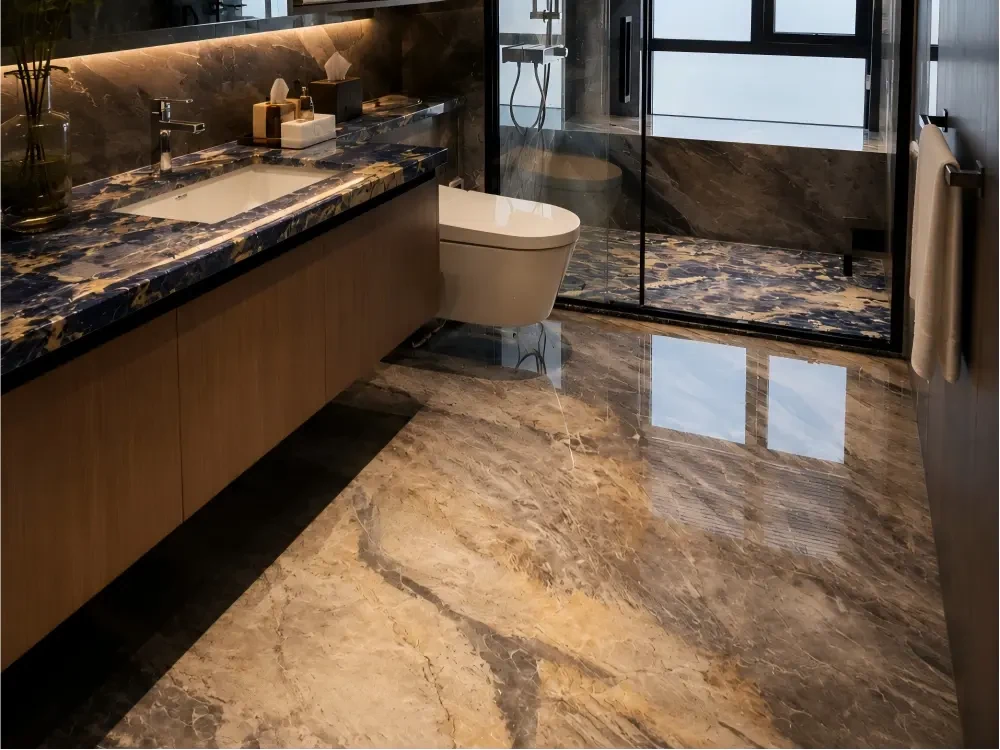
Bathroom Vanity and Floor
Wet-area use requires substrate, drainage, slip, sealing and cleaning decisions in addition to color selection. Vanity cutouts and floor-module sizes should be planned from the same approved slab range when visual coordination matters.
The application photograph communicates a design direction. Final supply must follow the approved physical slabs, fabrication drawings, engineering interfaces and installation requirements for the project.
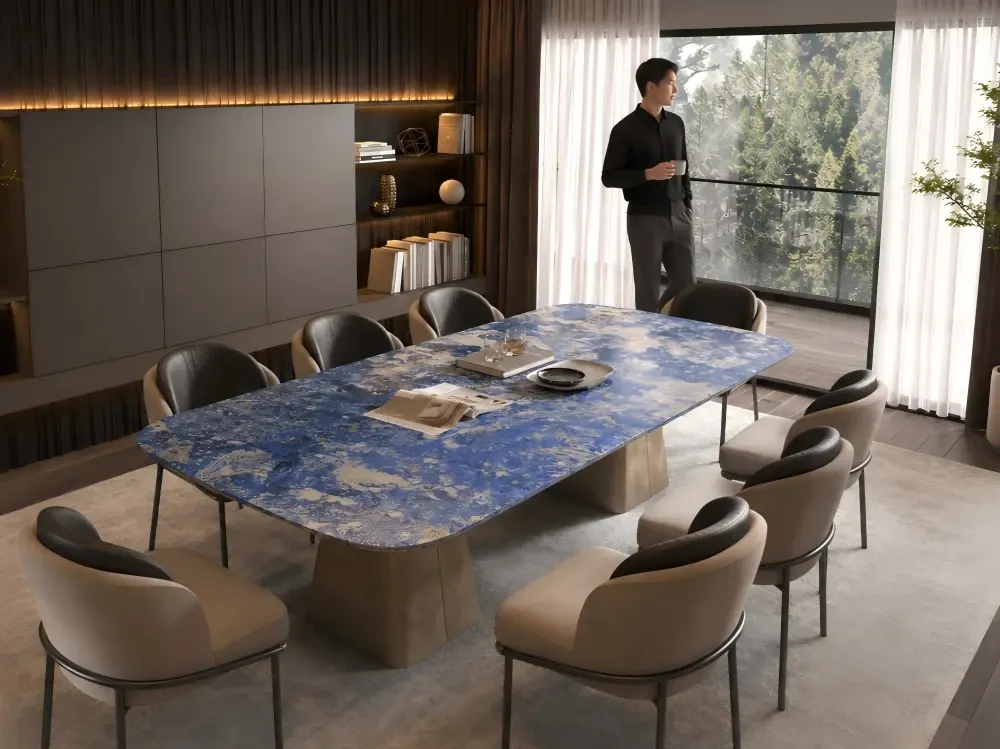
Dining Table
A table presents the stone at close viewing distance. Select a crop with a controlled center, confirm edge construction and base fixing, and protect sufficient matching material for any visible apron or replacement component.
The application photograph communicates a design direction. Final supply must follow the approved physical slabs, fabrication drawings, engineering interfaces and installation requirements for the project.
Bespoke Stone Artwork
Small sculptural objects can use expressive offcuts, but the fabricator still needs sound material around thin walls and drilled areas. Color and pattern should be chosen specifically for the final object scale.
The application photograph communicates a design direction. Final supply must follow the approved physical slabs, fabrication drawings, engineering interfaces and installation requirements for the project.

Fabrication Decisions That Protect the Design
Directional transitions should be treated as part of the shop drawing. Waterfall returns, mitred furniture edges, vanity splashes and connected wall panels need an agreed opening direction. Narrow rails around basins or service holes require special review because the most visually complex mineral boundaries may also affect handling and reinforcement decisions.
Before production, the approved shop drawing should define finished dimensions, tolerances, visible faces, seam positions, vein direction, cutouts, edge construction, reinforcement, support and piece identification. Any change after cutting can affect both yield and visual continuity.
Buyer Risks and Common Ordering Mistakes
Selecting from a cropped beauty image
A close crop hides the balance of blue, white and green-grey areas, so the installed surface may feel lighter or more active than expected.
Treating application renders as stock proof
Styled images explain design direction but do not confirm the exact current slabs, dimensions, repairs, finish or available quantity.
Cutting without visual hierarchy
Random nesting can place the strongest movement in waste, split a key transition at a seam or leave connected pieces looking unrelated.
If X → Choose Y Procurement Logic
Commercial Scope for International Projects
For international B2B orders, the quotation should distinguish slab supply from finished fabrication. State whether the package requires raw slabs, cut-to-size wall panels, assembled furniture components or a complete room set. Drawings, finish samples, tolerance notes, piece labels, inspection records and packing sequence should all refer to the approved slab numbers.
Quotation Checklist
Send drawings or finished dimensions, quantity, thickness, finish, edge details, cutouts, acceptable variation, destination, target schedule and the required inspection and packing scope. For visually connected pieces, also identify the main viewing direction and any bookmatch, vein-following or waterfall requirement.
Quality Control and Export Packing
| Before Cutting | Confirm slab IDs, dimensions, usable areas, surface condition, finish, orientation, nesting and signed layout approval. |
|---|---|
| During Production | Check dimensions, diagonals, cutouts, edges, mitres, holes, reinforcement, finish consistency and piece labels against the approved drawing. |
| Before Packing | Review visible surfaces, dry-fit relationships where specified, quantities, spare pieces, protective film or interleaf material and packing order. |
| Export Shipment | Use suitable reinforced crates or A-frames, moisture protection, clear shipping marks, packing lists and loading records appropriate to the product and route. |
Inspection should focus on agreed acceptance criteria, not on making natural stone look manufactured. Written variation standards and signed slab layouts reduce disputes while protecting the visual intent of the project.
JOAN STONE · Material-to-Shipment Support
How JOAN STONE Supports Sodalite Blue Extra Quartzite Slabs Orders
JOAN STONE supports buyers from visual material review through fabrication coordination and export preparation, with checkpoints recorded before irreversible work begins. For this material, buyer review should cover full-face movement, natural fissures, resin or mesh support, cutout zones, edge construction and sealing expectations before production is released.
First-hand evidence on this page: This product record currently includes 7 linked images for initial review. They provide first-hand visual references from the product file, while final purchasing approval should use the current selected batch, identified full-face photographs and agreed acceptance notes.
- 01Actual Material Review
Coordinate current slab or panel photographs, close-up details, dimensions and selection notes for the pieces being considered.
- 02Layout & Drawing Coordination
Review orientation, seams, sizes, thickness, edges, openings and the intended crop before the material is committed to cutting.
- 03Fabrication & Inspection
Support cut-to-size work or finished components, then coordinate surface, dimension, label and packing checks according to the approved scope.
- 04Export Handling
Coordinate packing review, export documents, container loading communication and shipment follow-up for international orders when required.
For a workable quotation: send the application, drawings or required sizes, quantity, preferred finish, edge and cutout details, destination, target schedule, packing needs and inspection expectations.
FAQ for B2B Stone Buyers
Can I approve the actual Sodalite Blue Extra Quartzite slabs before ordering?
Yes. Current slab photographs, dimensions and available selection details can be provided. Selected slabs and marked cutting layouts can be approved before fabrication.
Will every Sodalite Blue Extra Quartzite slab have the same blue color?
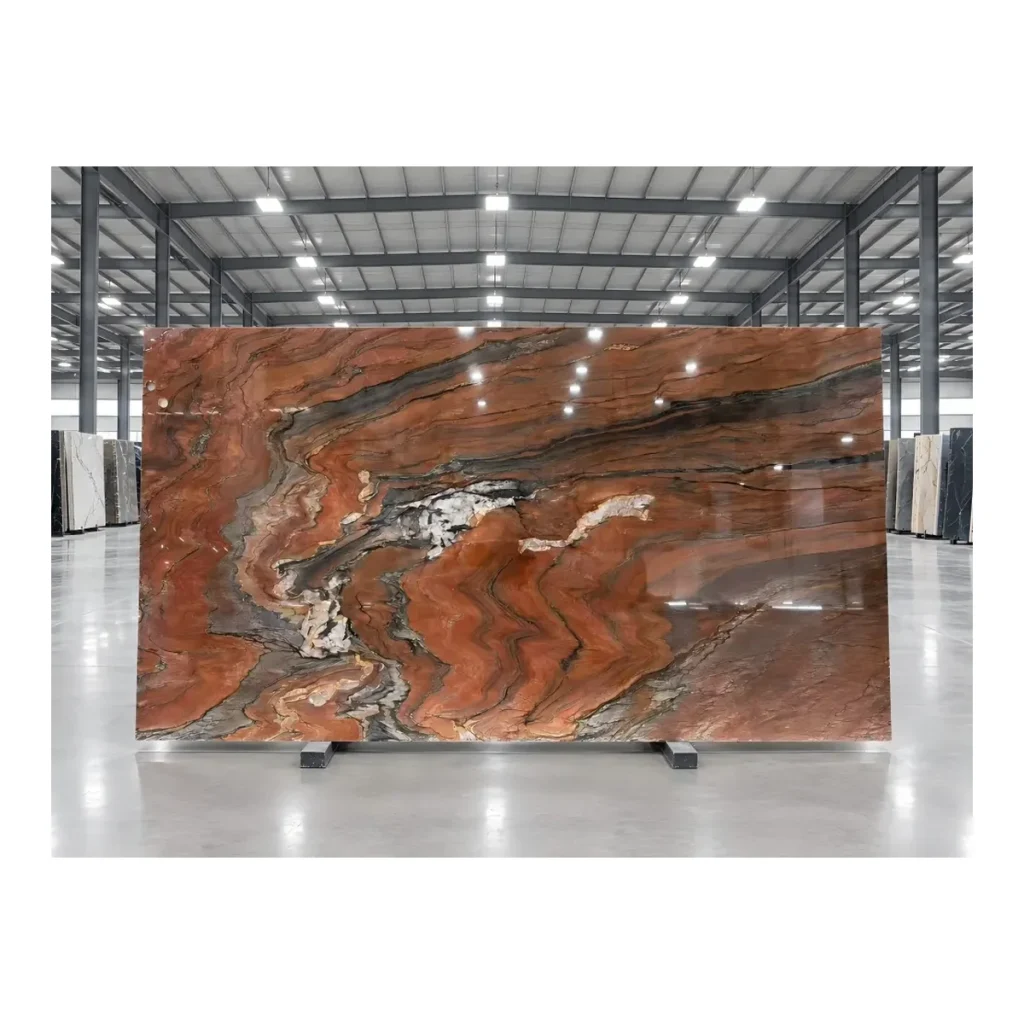
No. Blue saturation, white crystalline areas, green-grey transitions and mineral movement vary naturally by slab and block, so an approved range is essential.
Can this stone be used for bathroom vanities and floors?
It can be considered after reviewing the actual slab, finish, wet-area detailing, slip requirements, substrate, drainage, cutouts, sealing, installation and maintenance plan.
What is the main risk when fabricating a feature wall?
The main risk is losing visual continuity through unplanned joints, orientation changes or cutouts. Approve the complete elevation and numbered panel layout before cutting.
What information is needed for an export quotation?
Send drawings or dimensions, quantities, thickness, finish, edge details, cutouts, destination, schedule, acceptable variation, inspection requirements, labeling and packing standards.
Final Note / Practical Takeaway
Sodalite Blue Extra Quartzite should be purchased as identified natural slabs, not as a color name alone. Approve the real material, connect it to a marked cutting layout, define measurable quality checkpoints and confirm export packing before production. This approach protects appearance, yield, schedule and installation coordination.